Guidelines - recommendations Industries and Markets Publishing Universities
Introduction to copyright and generative artificial intelligence
Olivier Charbonneau 2026-03-24
In this post, I provide some introductory remarks on copyright and generative artificial intelligence (GenAI) for colleagues in the accountancy department at the John Molson School of Business (JMSB) at Concordia University.
1. How does copyright work?
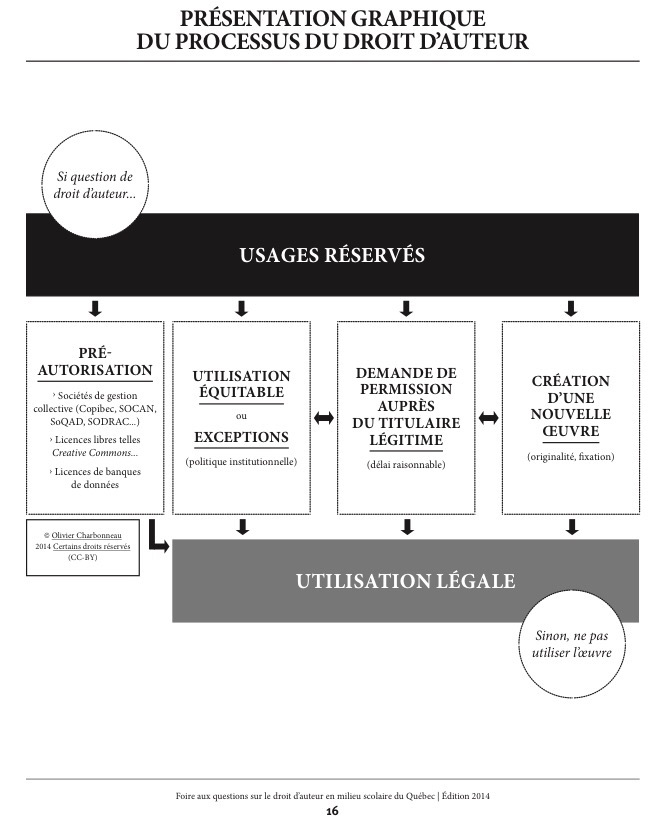
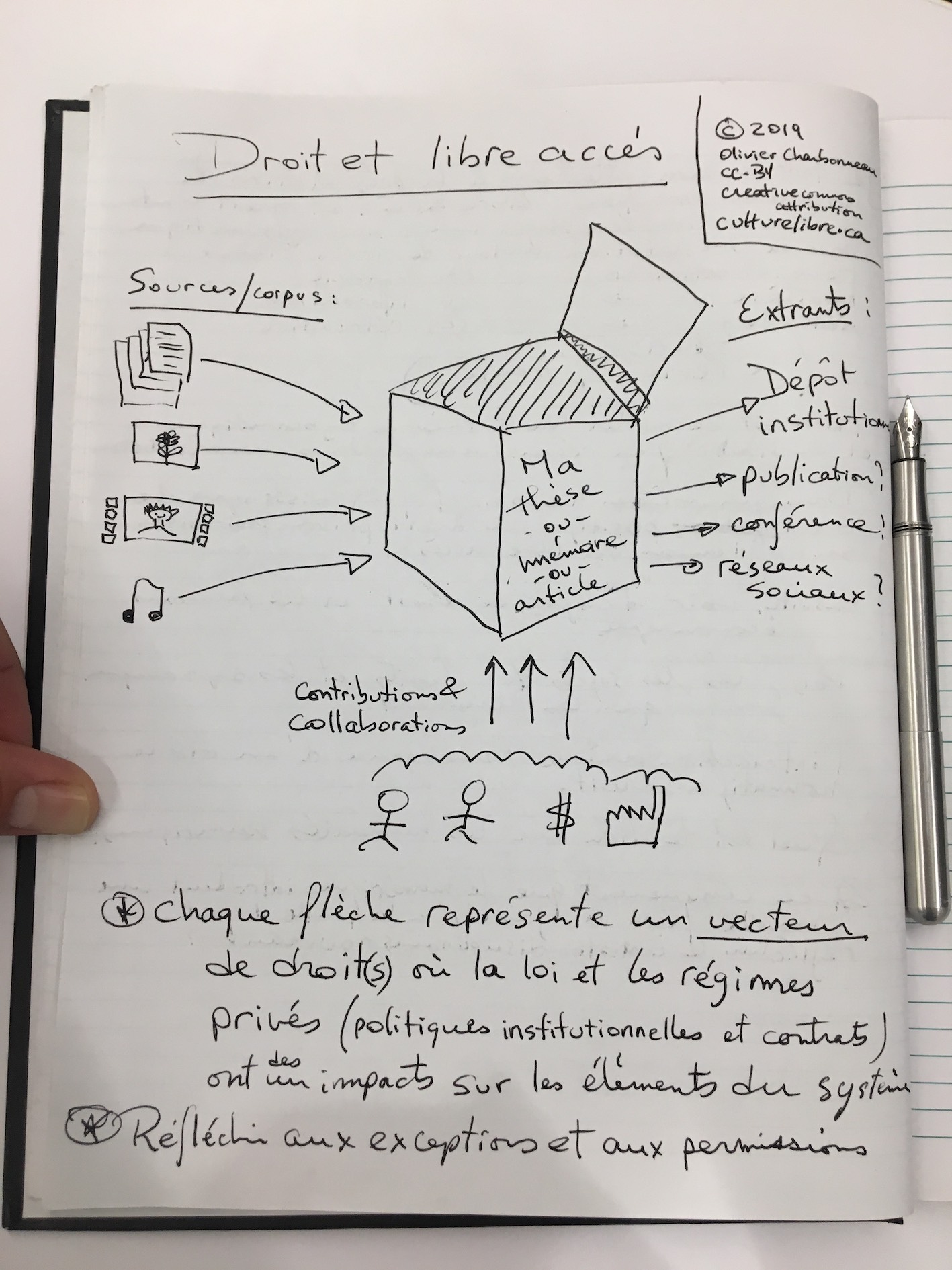
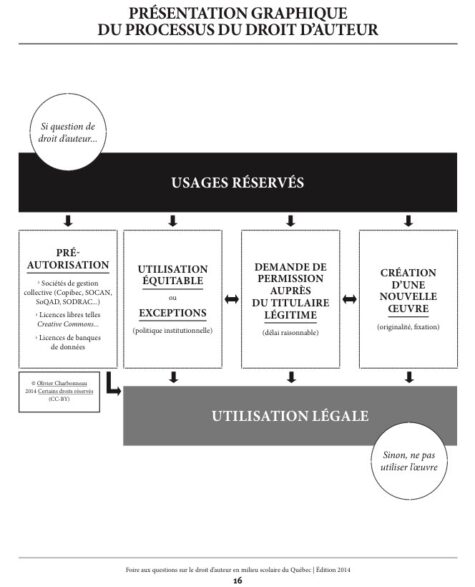
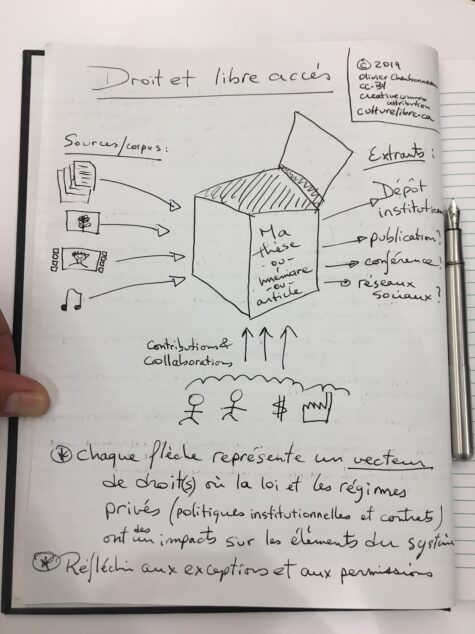
Copyright is enacted by a federal statute, whereby conferring economic and artistic rights to creators of qualifying works. These rights may be mobilized by contracts or agreements, often called licenses when they are limited in scope. Copyright agreements mobilize copyrights with regards to many components, such as monetary flows, duration and termination, geographical dimension, markets, exclusivity, transferability… the complexity and nature of copyright agreements is up to the parties involved, the federal statute allows for an almost infinite combination of arrangements. When mobilizing exclusive rights, an agreement is necessary.
Copyright ownership is usually vested in the original creator. In Canada, employers are assigned the ownership of copyrighted works produced by their full time & permanent employees, unless their work contract stipulates otherwise. At Concordia, the CUFA collective agreement reverts copyright back to faculty with the University retaining a license on all materials for educational purposes for a decate. On the other hand, the CUPFA collective agreement, governing contractual workers, is silent in the matter.
In recent years, the digital environment has introduced a new kind of agreement, open licenses, which facilitate the sharing, reuse or distribution of online content without remuneration. These include Creative Commons or open source software licenses. At Concordia University Libraries, we support the transition to open access through open textbooks, open scholarship, and Spectrum, our open archive. Open licenses are essential to the movement toward open access.
In addition to economic and artistic rights, the Copyright Act edicts exceptions that are afforded to user communities in specific and limited circumstances. The most notable are the “fair dealings” exceptions, not to be confused with “fair use” in the USA. In Canada, there are eight fair dealings: education, research, private study, news reporting, parody, satire, criticism or review. In the “CCH Case” of 2004, the Supreme Court of Canada established boundaries to fair dealings. Other exceptions include those for the print disabled, for libraries and archives, or for educational institutions. When one qualifies for an exception, use may proceed with neither an agreement nor a payment. Libraries are often tasked with governing copyright exceptions.
Also, Copyright establishes institutions that govern the artistic, cultural, creative or communication ecosystems. These include collecting societies which automate or streamline rights clearance, a specialized tribunal, review parameters as well as other measures. In the educational sector, Copibec is a collecting society which offers licenses for reprography or digital use of textual material, most notably coursepacks. Similarly, the Library offers digital collections under licenses to the university community.
Finally, copyright interacts with many other legal regimes, most notably provisions in the Civil Code of Québec, which govern contracts or image rights, or federal telecommunications regulations, which govern what is broadcast on national airwaves.
For more information about Copyright, please access Concordia University Library’s Copyright Guide, the Policy on Copyright Compliance (SG-2), the Copyright Guidelines for instructors or simply ask your librarian before contacting anyone outside the organization about copyright.
1.1 Simplified copyright workflow
1.2 Digital works are often “compilations” of many other pieces
2. Generative Artificial Intelligence
2.1 GenAI at the Library
Concordia University Library offers many opportunities to engage with GenAI. These include:
GenAI Quickstart: Foundations for Faculty
Quick Things for Digital Knowledge
UdeMy subscription
2.2 GenAI at Concordia
Guidelines for Teaching with Generative Artificial Intelligence
3. Conclusion
Your librarian offers a bespoke and dedicated consulting service and is available to meet you, your students or your class upon request.
Critical Thinking Publishing Reference
What are primary sources in business?
Olivier Charbonneau 2020-10-07
According to the Concordia University Library website:
A primary source is any original work that is unmediated by external analysis, evaluation, or interpretation. A secondary source is typically an external study of primary sources, usually written retrospectively. A tertiary source typically amalgamates the content found in primary and secondary sources and is less critical or argumentative than secondary sources.
Source: Concordia University Library, What are primary sources?
With regards to primary or secondary sources, the distinction usually about the identity of the organization issuing the source. In the field of business, primary sources are documents issued by the corporation (press releases, product catalogues, corporate websites, advertisements, financial statements and other filings, etc.) while secondary sources are issued by others, most notably journalists or researchers writing articles about the corporation.
Interviews throw an interesting curve ball into this distinction. I would say that a news or trade journal article featuring an in-depth interview with an executive would probably qualify for a primary source, if the article contains only the interview. If the article only has a few quotes from a company source but contains much more than just the interview (say, commentary or analysis), then the article in question ceases to qualify as a primary source (primary = from the mouth of the corporation or their executives).
It is important to note that certain academic disciplines may have a different definition for primary/secondary sources. Most notably, historians usually consider historical newspaper articles as “primary sources” in their disciplines because of how they conceptualize these sources within the framework of their academic discipline. This is important should you seek out information on the Internet about primary/secondary sources…
Guidelines - recommendations Information literacy Publishing
Articles for business & academic insight
Olivier Charbonneau 2019-01-21
This post contains the lecture notes I will be using in an honors level undergraduate class. Remember, the library offers a Business Research Portal.
1. Is there information on the Internet?
- Lecture; 10 minutes
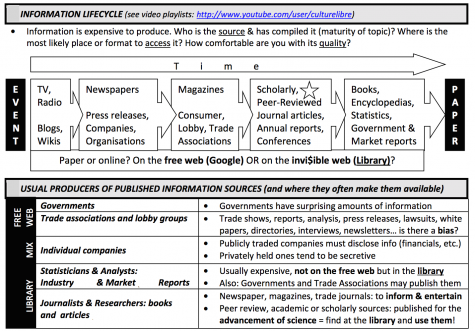
- Synthesis: Information (or more precisely: facts, opinions and data) is contained in documents. Documents may be posted on the Internet or published in electronic or print venues accessible through subscriptions or other forms of payment. A successful search for information implies thinking about (1) the motivations of those creating documents (e.g.: the goal) and their (2) expectations about posting on the internet or publishing in paid-for venues (e.g.: the source).
2. Compare articles
- Activity; 10 minutes; Compare articles from various sources: blog, magazine, trade journal, Wikipedia, subject encyclopedia and scholarly journal
Paper copies: magazines and scholarly journals
Wikipedia (Entry for International business) vs. International Encyclopedia of the Social & Behavioral Sciences (entry for International Business)
Blog (The benefits of online gambling) vs. Research Article (Video Lottery is the Most Harmful Form of Gambling in Canada)
- Focus: distinction between free or invisible (library) web
- Synthesis: all articles are not created for the same audiences. Academic or peer-reviewed articles are the standard way to publish research results. University students are groomed to craft academic articles through writing papers as part of the requirements for their classes
3. Academic articles: structure and editorial process of scholarly communication
- Lecture; 10 minutes
- Synthesis: Structure & Editorial process of scholarly communication.
- Structure of an academic article: research questions; conceptual framework; hypothesis/objectives and method; data & analysis; conclusion (very similar to an academic paper)
- Process: peer review
4. Tools & strategies
- Activity: 20 minutes
- Transforming concepts to keywords for database searching
- Compare Google Scholar and a library article database
- Working from a known item – read the bibliography and explore related articles. Locate the article in a database and obtain keywords
- Data sources on the Internet – be mindful of secrets
5. Outputs
Annotated bibliography: 5 minutes
Academic paper: 5 minutes
Using MS Word(tm) with style
Citing business databases in APA format
Automated citation system: RefWorks or Zotero
6. Questions and discussion
Assessment Publishing Research
Altmetrics in Context
Olivier Charbonneau 2014-01-12
The Canadian Association of Research Libraries (CARL) has published a useful guide to altmetrics (pdf). Altmetrics are alternative metrics to measure the impact of research.
Also of interest, the Summer 2013 (vol. 25 issue 2) issue of Information Standards Quarterly from NISO covers altmetrics (direct link to the PDF of the full issue).
In the same vein, one can determine the impact of an institutional repository by visiting this page ranking repositories. The link send you to the Canadian listing, where my home institution’s Soectrum ranks fifth. In fact, I just learnt that I’m still in the top 10 researchers being downloaded from my University’s Institutional repository!