Google
Another Google class (on analytics)
I just registered for a class by Google on Analytics, the metrics of Web sites. It follows another class by Google I took, on power searching.
I just registered for a class by Google on Analytics, the metrics of Web sites. It follows another class by Google I took, on power searching.
On the MOOC thread, I noticed this session on Library related MOOCs.
Interesting article on the games played in libraries of old:
Playing in the Past: A History of Games, Toys, and Puzzles in North American Libraries
Scott Nicholson
The Library Quarterly: Information, Community, Policy
Vol. 83, No. 4 (October 2013), pp. 341-361
ABSTRACT
Games and other forms of play are used in today’s libraries to attract underserved patrons, to introduce patrons to other library resources and services, and to facilitate engagement between library patrons. While many perceive gaming as a new library service, gaming services have been part of librarianship since the nineteenth century through chess clubs. During the Great Depression, libraries supported patrons with puzzle contests and developed circulating toy and game collections. Academic libraries built game collections for research and classroom needs, while school libraries collected and facilitated educational games to aid teachers. Video games have been used in libraries to help patrons learn to use technology and to bring groups of patrons together to enjoy shared experiences. The goal of this article is to demonstrate the different ways in which libraries have used games, toys, and puzzles over the last 150 years through both collections and services.
I just listened to a great podcast from Educause with e-Learning Librarian at Wake Forest University Kyle Denlinger by Gerry Bayne (about 20 minutes). It covers an information literacy MOOC for alumni & parents of students – a great way to reach out to an extended community, impress the Provost and schmooze with potential donors.
The HLWiki site, supported by health librarians in Canada, offers a page on critical thinking as well as Critical Pedagogy and library instruction. Both contain references and tons of resources.
Edward de Bono has written dozens of books on the thinking process. He came up with the “lateral thinking” meme and even hosted a series of TV shows on the BBC in the 1980 on the subject. Many of his lectures are available on YouTube.
An interesting website: Effective Thinking’s online learning resource with a summary of strategies.
We are undergoing a library redesign project and here are some brainstormed ideas of how I would create an information experience at a modern university library:
1. Would it be desirable to have a prominent desk greeting users as soon as they enter the library, or a more open space (with a smaller desk) that would allow users to get acquainted with their environment?
Desks create a barrier between the patron and us. Why not an open space, with a few bar-height round tables with stools, carpeting (or different flooring) to indicate that this space is special. This space could be directly in front of the entrance, the first thing students see when they come in.
Other spaces could be designed close at had, like a more private “cabinet’ type with table, chairs and connectivity tools (chargers, plugs, etc.) In all cases, the consultation space should be open – ne distance between users and staff.
2. What kind of furniture would you like to see in the new space?
Round tables. Same chairs for patrons and staff. High tables and stools for quick discussion. Closed cabinet for longer issues.
3. What type of equipment / tools / technology should be available?
Internet. Multiple surface technologies – Wired PC with many screens facing in various directions. Tablets. Paper and pencils also – they are mysteriously portable, stable and useful when available. Other paper technology: Stapler, stapler-remover, hole punch, high-capacity printer. Electricity plugs. CD Burner. USB connectors easily available. 3D printers…. maybe even a few reference books still. Expresso machine (the kind that makes coffee).
4. Should there be many levels of service spaces available (i.e. information, reference, technical assistance, etc.), and if so, how would you envision the furniture / technology available for each?
Remember, users do not care what “category” their question falls under. They will keep asking if they feel their interlocutor is competent. So, this question is biased towards our conception of their need (which, I will argue without further discussion, is wrong).
Time is the only factor useful to distinguish between the “types” of questions. So, there are long interactions and short interactions. Short ones require an open, standing-up level, space, with high round tables and longer interactions require more comfortable, intimate, space. Round tables and same chairs for patrons and staff speak to an open, collaborative, collegial service.
5. Any other comments on how you would envision the space (or anything else you’d like to comment on)?
Yes. The name we give to the service is everything. I hate long complex concept driven names. I like short, evocative names. So, I would call the RefTechInfo desk the “ASK” area and the circulation desk the “GET” area. This draws from the FTP (file transfer protocol) whereby you define system functions with simple 3-letter words. Would help with branding and directing students to the proper area.
Stop using the word “desk” – a desk is where you sit and work. We interact with patrons, so we need a new way to explain the space… I suggest “area” as a better term, there could be others.
The Spring 2013 issue of Library Trends deals with gaming in libraries (v. 61, n. 4), public, academic or otherwise. The editor of this special issue presents it in light of his recent book:
In my book, Everyone Plays at the Library: Creating Great Gaming Experiences for All Ages (2010), I created a model for the library gaming experience that brings together players, the game world, spectators, and library staff and explores how each interacts with the others. On the basis of this model, I developed a set of five Game Experience Archetypes that provides the organizational structure for the book and a basis for librarians to assess the usefulness of games of all types in meeting the goals of their libraries. Librarians looking to create a gaming experience can start by selecting an archetype based on their goals and then choose games that will bring about that game experience. This ensures that the chosen games meet the goals of the gaming program and fit into the mission of the library.
Each of the five archetypes—Social, Narrative, Action, Knowledge, and Strategy (SNAKS)—focuses on a different area of this model. Specific game titles can fit with more than one archetype, so librarians seeking to use games to meet different needs for different audiences should select games that span a variety of archetypes. Social game experiences are those that focus on facilitating social interactions among players; they are useful when a library uses games to forge connections between different groups of patrons. Narrative game experiences are those that immerse players in a story and can be useful for libraries wanting to connect games to literacy. Action game experiences reward physical skill, either with the use of a digital game controller or the manipulation of something in the physical world, and can create a lively game experience that generates excitement in players and spectators. Knowledge game experiences are focused on the knowledge that players bring to the game table and are a good match for libraries meeting educational goals. Strategy game experiences emphasize the decision-making processes that challenge players; these game sessions [End Page 752] tend to be quiet and create opportunities for players to engage with a few others at a deep level.
The goal of this special issue is to take a close look at different library gaming programs. Authors who wrote for the issue were challenged to explore the impact of gaming programs in their libraries. In each of the articles, the author presents a different way of bringing gaming into the library and then explores the impact of these library gaming programs.
Of particular interest for academic libraries is this article:
Brawling in the Library: Gaming Programs for Impactful Outreach and Instruction at an Academic Library
pp. 802-813 | DOI: 10.1353/lib.2013.0016
Angela M. Vanden Elzen, Jacob Roush
[youtube=http://www.youtube.com/watch?v=aCwLQrJz4Bo&w=420&h=315]
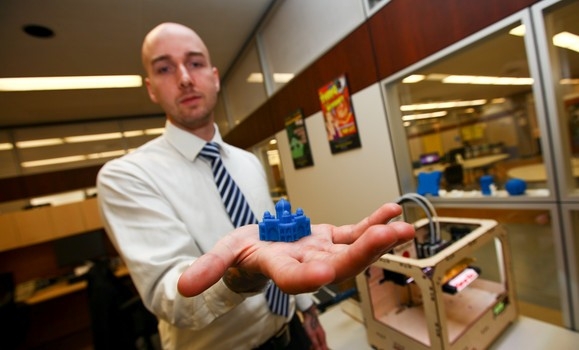 I just learned that Mike Groenendyk is joining Concordia University Libraries as a fellow business librarian. Michael comes to us from Dalhousie University Libraries, where he’s had quite a bit of impact !
In my lazy-yet-mysteriously-efficient-googling, I’ve stumbled on this really interesting project to bring 3D printing to the DAL Libraries, funded by CARL. Watch a YouTube video of a joint presentation at the Access 2012 conference:
[youtube=http://www.youtube.com/watch?v=hWqdQZ1FowY&w=560&h=315]
Also if interest is this video from PBSoffbook on 3D printing:
[youtube=http://www.youtube.com/watch?v=X5AZzOw7FwA&w=560&h=315]
My favorite use of 3D printing so far? Making the characters of the stop-motion animation film ParaNorman. That and a harmonica. Harmonicas are cool.
Also of interest is this thread from the blog at MakerBot on 3D printing in Libraries.
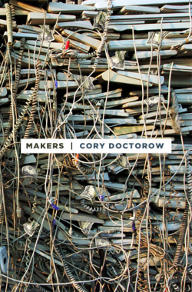 If you want to read up on the potential of 3D printing, I highly recommend a novel by Cory Doctorow called Makers, available in print or free download. I devoured it during my summer vacation and it really speaks to the potential of this technology. The protagonists are two hacker/artists and they meander through a seemingly probably web of open communities, fans, fellow hackers and corporations spanning the evil/good axis. I personally thought that there was just a tad too much romantic melodrama, but in the end it was pale in comparison with Cory’s vision about 3D printing.